
You can have a perfect swell — long period, clean lines, the right direction — and still paddle out into a churning, unsurfable mess. The reason is almost always the same: wind.
Swell decides whether there are waves. Wind decides how good those waves are on the day you get in the water. Wind is the difference between glassy, peeling walls and a wind-blown closeout. It can turn a spot from magic to useless in one hour. This guide explains what offshore, onshore, and cross-shore wind do to a wave. It also shows you how to read the wind on a forecast, before you drive to the coast.
First: how a forecast names wind direction
A surf forecast names the wind for the direction that the wind blows from, the same as swell direction. But what matters for surf is how that wind meets your coastline. Does it blow off the land, or onto it?
That gives you three cases:
Offshore — the wind blows from the land out to sea.
Onshore — the wind blows from the sea onto the land.
Cross-shore — the wind blows approximately parallel to the beach.
Everything that follows comes down to those three. Learn them and half the mystery disappears: why was it so good this morning and so bad by lunch?
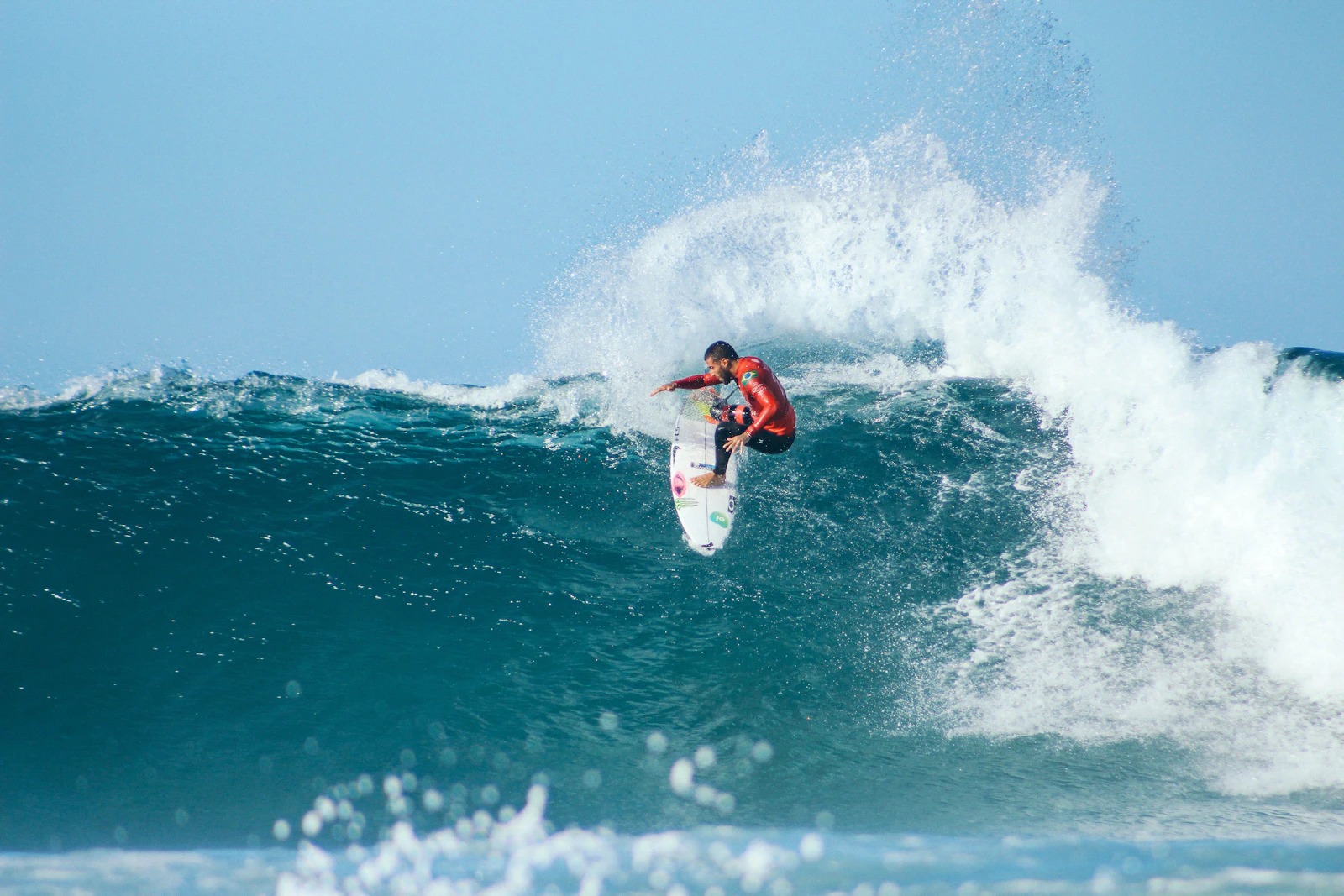
Wind blows from the land into the wave's face, holding it up steep and grooming the surface glassy.
Offshore wind — the wind you want
Offshore wind blows from behind the wave, against the direction that the wave travels. It does three good things at once:
It holds the wave up. The wave stands in the shallows and tries to break. The offshore wind pushes into its face and delays the lip. The wave stacks up steeper and cleaner, and it does not crumble.
It grooms the surface. Offshore wind smooths the water in front of the wave. It flattens bumps and chop into a clean, glassy face.
It can hold a barrel open. On a hollow wave, a firm offshore wind holds the lip up and out. It feathers spray off the top and helps the wave throw a clean, open tube.
This is the "clean" surf that you see in photos: smooth faces, feathering spray off the crest, and waves that break with shape and power. When a forecast shows light offshore wind over a decent swell, that is your signal to go.
But there is a limit. Too much offshore wind is a problem of its own. A strong offshore wind holds the waves up so hard that they break late and fast. It makes them difficult to paddle into, and it can blow you back over the top as you drop in. Light to moderate offshore is the sweet spot. A howling offshore wind is not the gift that it looks like on paper.
Onshore wind — the mush maker
Onshore wind blows from the sea onto the land, in the same direction that the swell travels. It does the opposite of offshore wind, and none of it is good:
It breaks the waves early. The wind pushes on the back of the wave and tips it over before it stands up. The wave crumbles, and it never forms a clean, breaking face.
It kills the shape. Waves close out, break in sections, and lose the steep, peeling wall that you can ride along.
It wrecks the surface. Onshore wind piles chop and texture onto the water. It turns a clean face into bumpy, disorganized "mush."
A strong onshore wind over a good swell gives the classic "blown out" day. The surf report says two meters, and you arrive to a grey, choppy mess that is barely surfable. Onshore wind is the most common reason that a promising forecast disappoints in person.
But not all onshore wind is equal. A light onshore wind over a solid groundswell can still be perfectly surfable, above all early, before the wind builds. Strong, sustained onshore wind does the real damage.
Cross-shore wind — between the two
Cross-shore wind blows approximately parallel to the beach. It blows neither cleanly off the land nor straight onto it. Its effect is between the two:
It adds texture and bump to the wave face, but it does not destroy the face.
It can make waves break unevenly, and favor one direction along the beach.
A slight cross-offshore wind (angled partly off the land) is often nearly as good as a straight offshore wind. At some spots it is the best wind of all, because of the way the coastline sits.
Most real wind is not perfectly offshore or onshore. It arrives at an angle. When you learn to judge that angle against your local beach, wind stops being theory and becomes local knowledge.
Why the same wind is great at one spot and terrible at another
This is the part that confuses people: there is no universally offshore wind. The direction that your beach faces defines offshore and onshore completely.
A west wind is dead offshore at an east-facing beach. The same west wind is dead onshore at a west-facing beach, on the same day. Two spots a short drive apart, that face different directions, can have completely opposite conditions in the same weather.
This is why local surfers move between coastlines as the wind turns. When the wind turns onshore at the main beach, the move is to find a spot that faces the other way. Look for a sheltered corner, a beach around a headland, or the other side of a point. That same wind is offshore there. To know which of your local spots works in which wind is one of the most valuable things you can learn.
Why dawn is usually the magic window
Wind is the answer to a common question: why are surfers so obsessed with the dawn patrol?
On many coastlines, the wind follows a daily rhythm that temperature drives. At night and in the early morning, the land is cool and the air is calm or gently offshore. As the sun heats the land through the day, it creates a sea breeze. Air rises over the warm land and pulls cooler air in off the ocean. That onshore sea breeze builds through the afternoon.
The practical result is simple: dawn is often glassy and clean, and it blows out by midday. This is not superstition. It is the sea-breeze cycle. It does not happen everywhere or every day, because a passing weather system can override it completely. But it is common enough that "surf early" is reliable advice on many coasts.
How to read wind on a forecast
Read the wind on a forecast in this order:
Direction, relative to your spot. Is it offshore, onshore, or cross-shore for the way this beach faces? Ask this question first. The same wind means opposite things at different spots.
Strength. Light wind is forgiving in any direction. Strong wind exaggerates everything. It is great when it is offshore and moderate, and ruinous when it is onshore or howling.
Timing through the day. Read how the wind changes hour by hour. A spot that is clean and offshore at 7am can be blown out and onshore by 1pm. The window often matters more than the daily average.
A great swell with strong onshore wind can be unsurfable. A modest swell with light offshore wind can give a session that you remember for weeks. Always read the wind together with the swell, and never after it.
The bottom line
Offshore (from the land) holds waves up, grooms them clean, and gives them shape. Light to moderate is ideal. Too strong makes waves hard to catch.
Onshore (from the sea) breaks waves early and turns them to mush. It is the most common reason that a good forecast disappoints in person.
Cross-shore adds texture and bump, and its exact angle can make or break a spot.
It is all relative to the way your beach faces. Go to the coastline where the wind of the day blows offshore.
Surf early on most coasts, before the afternoon sea breeze arrives.
Read the swell and you know that there are waves. Read the wind and you know whether they are worth surfing. Read them together and the gamble stops. You start to show up on the good days.